Christian Money Lessons for Little Ones
“Only if you pay me”: What a Five-Year-Old Can Teach Us About Kids, Work, and Money
“Only if you pay me.”
Manuela met her mother, Evelyn’s eyes as she spoke. Evelyn gaped back at her five-year-old daughter, astonished.

“You were so excited to do your summer play book last week, Manuela!” Evelyn pleaded.
“Why don’t you want to do it anymore? You can get the sticker at the end if you finish.”
“It’s not a playbook. It’s work,” insisted the rising kindergartener. “You paid me to do the letters and numbers before! I should get paid for this workbook. It’s work.”
On this point, Manuela was correct. The book was meant to keep kids academically engaged over the summer, but she wasn’t fooled by the “play” label. Now her parents were stuck. Last week, they had paid her a quarter when she didn’t want to do the workbook. This week, she wanted the same treatment. Manuela had learned the value of her work—just not in the way her parents hoped.
If you have young children, this scenario probably feels familiar. Many parents deeply want to teach their kids financial basics, but don’t know where to start.
Enter the Mini-Economy
The suggested solution to this problem is called the mini-economy.
On the surface, it looks like a way to structure chores, allowance, saving, and spending. But its purpose is broader. A mini-economy teaches children how work, money, and goals connect. It gives elementary-age kids hands-on practice with habits and values they’ll use for the rest of their lives.
In a mini-economy, kids earn play money. They divide it into giving, saving, and spending. They spend it at a household store you set up. They create businesses, making goods or services to sell to siblings and parents—who also have to earn mini-economy money. It might sound complicated, but families can run a simple version in just a few weeks, even as a summer project.
The difference between this and traditional “pay-for-chore” systems is huge. In the usual method, money flows straight from parents to kids and then straight to the toy aisle. But in a mini-economy, money circulates within the household. Kids see how it flows. They see how their saving, spending, and working choices connect with others’. They see the value of things—not just the price.
Why Money Is Hard to Teach
Parents often feel uncomfortable talking about money. They may lack the vocabulary, feel insecure, or grew up with the belief that money is private and not to be discussed. And while parents teach most things by modeling—reading, washing dishes, playing sports—money is an exception. Adults earn and spend at a scale children can’t replicate. It’s hard to show them how financial decisions work when those decisions are far beyond their world.
Kids also don’t get much practice. They may learn to consume—spending birthday money or saving for a toy—but rarely learn how to produce. They don’t often get the chance to make decisions about what to create, how to price it, or how their choices connect to their income.
A mini-economy gives space to practice all of these skills.
Why I Tried It at Home
When I started a play-money economy in my own home, I thought it was mainly about teaching my kids finances. But I quickly realized something bigger was happening. I was teaching them about life and society, and how our family’s values shape the way we work and spend.
Over time we learned important lessons—what worked, what didn’t, and how small tweaks shaped big learning moments. There are wrong ways to run a mini-economy, but there are also countless opportunities to make it wonderful, meaningful, and aligned with your family values.
Reflection:
What important money lessons are you making sure to teach your kids? Are you regularly checking in with them to make sure their learning is progressing?
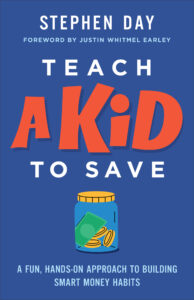
If you enjoyed this post, check out Teach a Kid to Save by Stephen Day. With chapters on work, rest, generosity, saving, spending, and entrepreneurship, as well as a quick-start guide, templates, visual aids, conversation starters, and a special appendix for homeschools, Teach a Kid to Save is the all-in-one resource you’ve been waiting for.

Stephen Day, PhD, is a term associate professor in the Virginia Commonwealth University (VCU) School of Business, director of the VCU Center for Economic Education, and chairperson of the Virginia Jump$tart Coalition for Personal Financial Literacy. He is the author of many peer-reviewed articles on teaching kids about money, and his ideas have been featured in Forbes, The Wall Street Journal, USA Today, and Junior Scholastic. He has helped hundreds of teachers create mini-economies in their classrooms, and he runs a household mini-economy with his own children.
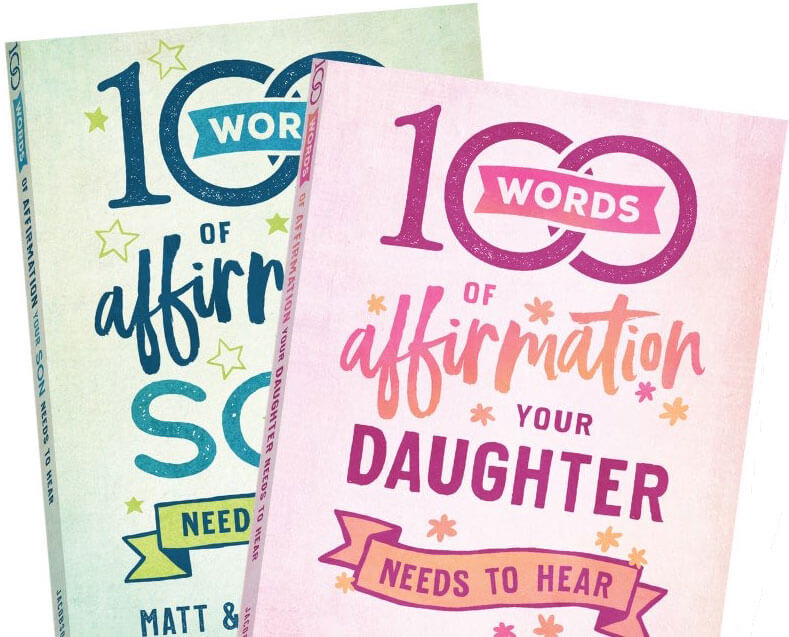
100 Words of Affirmation Your Son/Daughter Needs to Hear
Matt and Lisa Jacobson want you to discover the powerful ways you can build your children up in love with the beautiful words you choose to say every day–words that every son and daughter needs to hear.
These affirmation books offer you one hundred phrases to say to your son or daughter – along with short, personal stories and examples – that deeply encourage, affirm, and inspire.
So start speaking a kind and beautiful word into their lives daily and watch your children–and your relationship with them–transform before your eyes.