
Why Reading the Bible Feels Intimidating (And What to Do About It)
Reading the Bible can feel intimidating. Discover why Scripture feels overwhelming and how to read the Bible with confidence, clarity, and freedom from guilt.
Where do I even start? What does this actually mean? Am I understanding this right, or just making it up as I go?
If those questions sound familiar, you’re in good company. Most people who struggle to open their Bibles aren’t lacking desire. They genuinely want to spend more time with God through Scripture. What’s missing is confidence. And when that gap between wanting to engage and feeling equipped goes unaddressed, it quietly turns into guilt: I really should read my Bible more. Maybe I’m just not spiritual enough, smart enough, disciplined enough.
Here’s the truth worth sitting with—that guilt isn’t proof of a spiritual failure. It’s proof you’re not alone. Even lifelong followers of Jesus report feeling exactly this way.
The Bible Is a Library, Not a Single Book
Part of what makes Scripture feel overwhelming is its sheer scope. It’s not one continuous story told by one author; it’s a collection of sixty-six writings, from at least forty different authors, written across three different languages. Each writer brought their own history, personality, and voice to the page, even as God’s Spirit guided the message beneath the surface.
That’s actually good news. It means the Bible was never meant to be absorbed all at once or mastered like a textbook. It’s a library you get to walk through slowly, one shelf at a time.
You Don’t Need a Theology Degree
Here’s something that gets lost in translation for a lot of us: a few practical tools go a long way. Knowing a little about a passage’s context—who wrote it, who it was written to, what was happening at the time—can unlock meaning that otherwise stays hidden. But that kind of understanding builds over time. It’s not a prerequisite for starting.
And even when your grasp of the history or language is limited, God’s Spirit isn’t waiting on your expertise. The Spirit works in you and through Scripture regardless of how much background knowledge you bring to the page. Understanding deepens the experience. It doesn’t gatekeep it.
Every Verse Is Part of a Bigger Story
One helpful shift: remember that no verse stands entirely alone. Every verse belongs to a passage. Every passage belongs to a larger story or section. Every story contributes to a bigger theme, and every book plays its part in the overarching story God is telling. When a passage feels confusing or disconnected, it often helps to zoom out and ask where it fits in that larger arc, rather than trying to extract a complete meaning from a single isolated line.
You’re not required to have it all figured out before you begin. You’re just invited to keep showing up to the text, trusting that clarity builds over time, and that God meets you in the process, not just at the finish line.
Reflection
What’s one belief you’ve carried about needing to “get it right” before engaging with the Bible?
There is no such thing as “getting it right.” Let the Spirit work through you as you take the time to read through the Bible one step at a time.
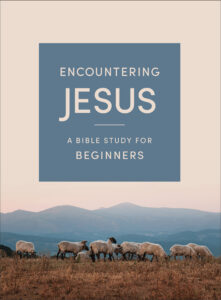
If this resonated with you, check out Encountering Jesus: A Bible Study for Beginners, a six-week guided study designed to help you build confidence engaging with Scripture on your own.
Blessings,
C31 Team