
You Can Raise Resilient Kids

The One Thing That Makes the Difference
Trauma. It’s a word we hear constantly, in schools, on social media, in parenting circles. But what does it actually mean, and more importantly, what does it mean for your child?

As counselors, we’ve seen firsthand how the word “trauma” has become a catch-all for almost any painful experience. Researchers at the Yale Center for Emotional Intelligence have noted that many people use the word too casually to describe events that make them uncomfortable or that they perceive as negative. And psychologist George Bonanno observes that, in today’s culture, “anything bad is trauma.”
That matters, because when we overuse the word, we risk underestimating our kids.
What Trauma Actually Is
There’s also an important distinction between Big T traumas, such as violence, disasters, or serious accidents, and Little T traumas, such as emotional neglect, bullying, prolonged conflict, or relocation. Both are real. Both matter. And the best predictor of whether a child not only survives trauma but actually thrives? According to the research, it’s one caring, consistent, compassionate adult in their life.
Just one.
You don’t have to have all the answers. But there are real, practical ways to be that person for your child.
Start with support, then move toward challenge.
When your child is hurting, begin with listening, empathy, and understanding. But don’t stop there. The goal is to gradually move toward opportunity, growth, and skill development. It’s equal parts of all three. Sitting with their pain matters, and so does gently helping them build the muscles to carry it.
Don’t rescue them from discomfort, prepare them for it.
Everything in us wants to protect our kids from hard things. But when we consistently remove the struggle, we unintentionally send the message that they aren’t capable of handling it. Instead, ask yourself: Am I prioritizing their happiness, or their health? Relief, or resilience?
Model regulation in front of them.
Kids learn more from observation than from information. When they watch you navigate a hard moment with steadiness, taking a breath, pausing before reacting, acknowledging difficulty without falling apart, their brains are making powerful connections. You don’t have to be perfect. You just have to be honest about the work you’re doing.
Remind them of their capability.
When your child is convinced they can’t do something, resist the urge to either rescue them or argue with them. Instead, remind them of a specific time they pushed through something hard. Point back to their own history of resilience. That is some of the most powerful language a parent can speak.
Because capable parents raise capable kids. And capable kids, even those who have walked through the darkest valleys, are far more resilient than we give them credit for.
Reflection
Think about a hard season your child has walked through. In what ways did you see them surprise you with their resilience? Are there areas where fear of their pain has led you toward protection rather than preparation?
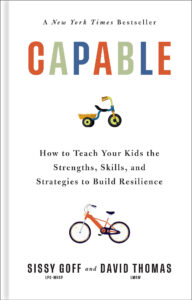
If you enjoyed this post, check out the book Capable by Sissy Goff and David Thomas to discover more on raising resilient, emotionally healthy kids. Drawing upon a clinically sound, faith-informed approach, Goff and Thomas help you raise resilient and emotionally healthy kids.
Sissy Goff, LPC-MHSP, is the co-executive director of Daystar Counseling Ministries. Author of the New York Times bestseller Capable and other popular books, including Raising Worry-Free Girls and Lucy Learns to Be Brave. She’s a speaker and co-host of the nationally recognized podcast Raising Boys and Girls.
David Thomas, LMSW, is co-executive director of Daystar Counseling in Nashville, Tennessee, and the author of several books. A frequent media guest and speaker, he cohosts a top parenting podcast, Raising Boys and Girls. Learn more at RaisingBoysAndGirls.com.