
Why Decluttering Alone Won’t Fix Your Overwhelmed Home

I have spent my entire life obsessing over decor. I’ve devoted my life to decorating—not the fancy kind, but good old homestyle, approachable, everyday decorating for regulars like us who buy stuff from Facebook Marketplace and mix it with a dash of Crate & Barrel, a sprinkle of Target, some hand-me-downs, and some amazing vintage finds.
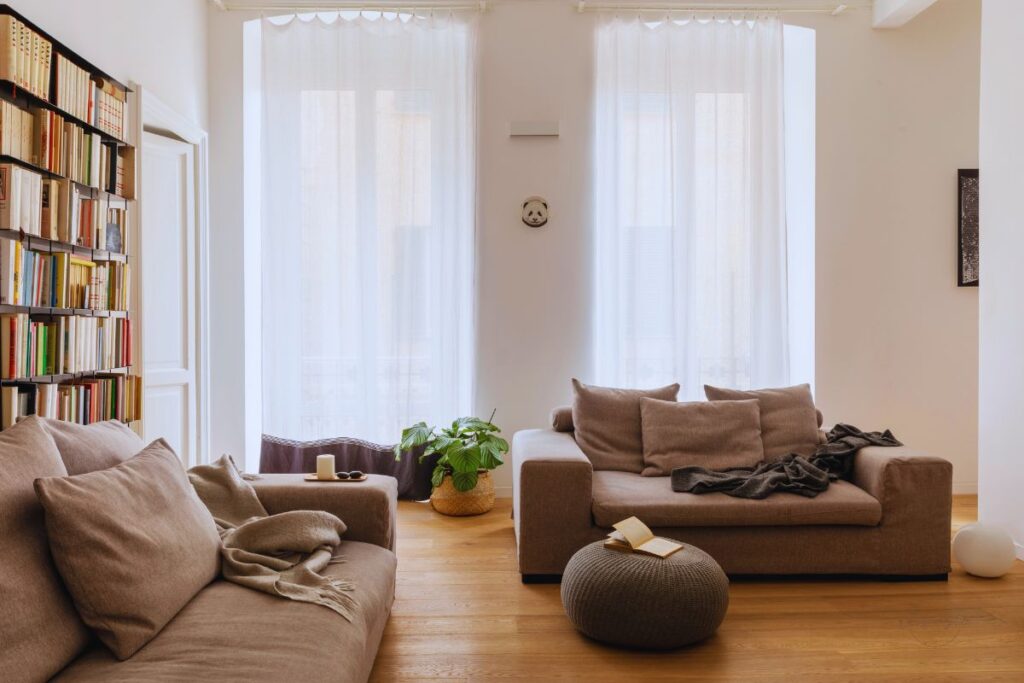
I will never get tired of decorating and talking about home. I am convinced it greatly impacts our lives. But decorating is not necessarily the best tool for a room that’s feeling overwhelming, chaotic, and loud.
What if you need to undecorate?
Maybe your dining room hasn’t been used as an actual dining room since last Christmas, and it’s filled with school projects, returns, and extra dishes. Or maybe you walked into the house after a long day at work, and instead of your home “rising up to greet you,” as Nate Berkus famously said, you feel like it’s struggling under the weight of everything it’s filled with.
Your home feels like a rude reminder of unfinished projects, procrastinated decisions, and stuff you don’t love but don’t hate quite enough to do anything about.
You need to hush your house.
Your House is Talking to You
Here’s the thing worth understanding: everything you own has a voice. Over time, as you add things, what started out as a lovely melody can become a roar. A visual roar.
Not all that visual noise is coming from your stuff. Sometimes the house itself is chiming in. Big architectural features, paneling, built-ins, exposed beams, arched windows, two- story ceilings, busy flooring— all those things have their own visual volume. You might be wondering why a space feels cluttered even if it’s not full, and that’s the sneaky truth about visual noise. It’s not always about quantity. It’s about how much is asking for your attention.
If you look around the room, you might hear, “Water me, clean me, use me, fix me, move me, invest in me, read me, appreciate me . . .” This is the silent to-do list, and none of us need our house talking back to us and making us feel like we aren’t doing enough.
The Cost of Visual Noise
Visual noise doesn’t just make a room feel cluttered; it makes you feel cluttered.
Even if you’ve technically decluttered. Even if your stuff is “good stuff.” Even if your house is decorated in a way that checks all the boxes. Visual noise costs us:
• mental clarity
• emotional margin
• creative energy
• our ability to relax
Hushing your house isn’t just about making things look nice. It’s about creating a home that doesn’t constantly demand your attention so you can finally give that attention to the people and things that really matter.
Another Way
Now’s not the time to decorate but to evaluate. We’ve been told that a peaceful home means a nearly empty home. But peace isn’t found in emptiness, it’s found in intention.
That’s why you’re going to love hushing your house. You can learn to adjust your home’s volume to create harmony, not silence.
House Hushing is about giving your spaces permission to breathe. It’s having empty corners that wait for inspiration, shelves that aren’t packed to bursting, and rooms that can transform as you need them to. A breathing home has margins. It has room for the unexpected. It has room for meaning.
It has room for you.
Reflection:
Where in your own home have you noticed that “silent to-do list” quietly telling you that you haven’t done enough? What would it look like to evaluate one space this week, not by asking what to declutter, but by asking what’s asking too much for your attention? Consider choosing one corner or surface and giving it room to breathe, clearing it not completely, but enough to let it exhale.
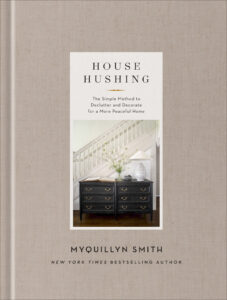
If you have enjoyed this blog post, check out the book House Hushing: The Simple Method to Declutter and Decorate for a More Peaceful Home by Myquillyn Smith. We love how she reframes a chaotic home not as a decorating problem, but as a noise problem you can learn to quiet.
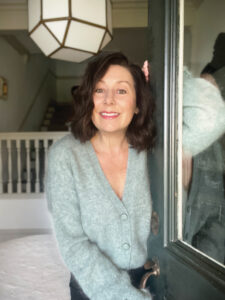
Myquillyn Smith, also known as “The Nester,” is the New York Times and Wall Street Journal bestselling author of Welcome Home, Cozy Minimalist Home, and House Rules. For the past 18 years, she has been encouraging women to embrace their space, imperfections and all, and make it their own. Her home in North Carolina has been featured in Better Homes & Gardens, Ladies’ Home Journal, and Cottages & Bungalows. She’s never met a home she didn’t love. Find her online at TheNester.com and on Instagram @TheNester.